
Split Ends: How to Repair Damaged Hair
Discover the causes of split ends and learn professional techniques to repair and prevent split ends, restoring your hair's health and vitality.
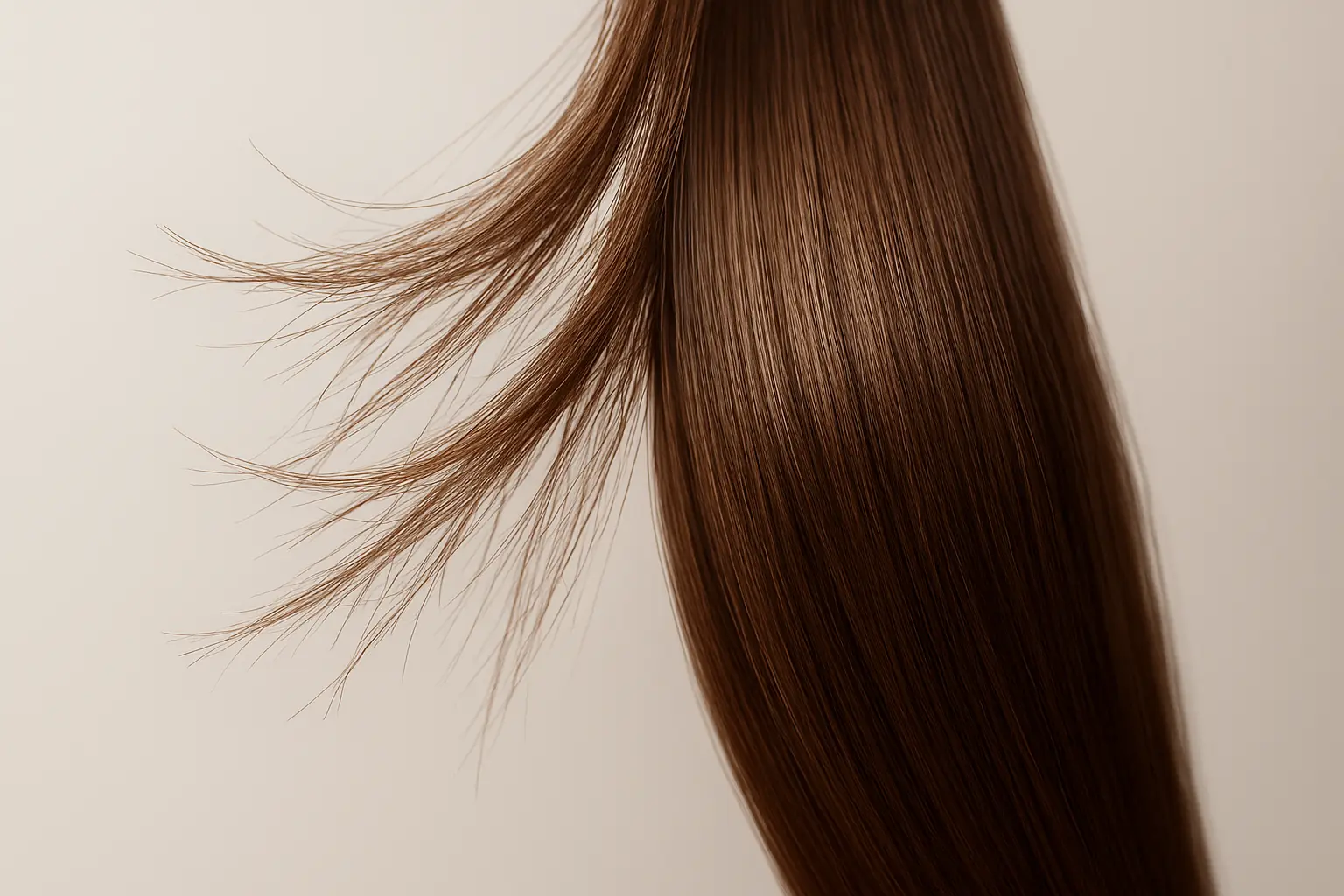
Split ends are one of the most common hair problems affecting hair health and appearance. When hair suffers damage, the outer protective layer (cuticle) lifts and breaks, causing hair fibers to separate and form split ends. This complete guide explains everything about how to repair and prevent this common issue.
Table of Contents
What are split ends and why they matter
Split ends, also known as trichoptilosis, occur when the hair shaft splits into two or more parts, usually at the tips. This happens when the outer protective layer of the hair (cuticle) becomes damaged and breaks.
When left untreated, split ends can travel up the hair shaft, causing more damage and breakage. This results in dull, dry, and unhealthy-looking hair, making it difficult to grow and maintain long, beautiful hair.
Types of split ends:
- Simple split: The end splits into two parts (most common)
- Multiple splits: The end splits into several parts, like a tree branch
- Knot: The end forms a small knot that can catch and break
- Feather: Multiple small splits along the hair shaft
- Tapered ends: The end progressively thins without visible splitting
Main causes of split ends
Understanding what causes split ends is essential to preventing them. Here are the main culprits:
Heat tools
Excessive heat from styling tools is one of the main causes of end damage.
- Using blow dryers, flat irons, or curling irons without heat protection
- Temperature too high (above 180°C for most hair types)
- Daily use of hot tools without rest days
- Holding the tool too close to the hair
Chemical treatments
Chemical processes weaken hair structure over time.
- Frequent coloring, especially bleaching
- Straightening and perms
- Chemical relaxers
- Products with harsh chemicals (sulfates, drying alcohols)
Environmental factors
The environment can seriously damage hair if not protected.
- Prolonged sun exposure and UV rays
- Pool chlorine
- Sea saltwater
- Wind and dry air
- Urban pollution
Mechanical damage
Daily care habits can cause physical damage to ends.
- Brushing hair when wet and vulnerable
- Using tight elastics and accessories
- Aggressive combing
- Excessive toweling or vigorous rubbing
- Sleeping with loose hair without protection
How to repair split ends: step by step
While you can't "glue" split ends back together (that's a myth!), you can significantly improve your hair's appearance and health with these steps:
1. Cut ends regularly
Cutting is the only true way to eliminate existing split ends. A professional cut removes damaged parts and prevents damage from traveling up.
- ✓Trim 0.5 to 1 cm every 8-12 weeks for healthy hair
- ✓Cut more frequently (6-8 weeks) if hair is very damaged
- ✓Don't be afraid to cut - healthy hair grows better
2. Use intensive treatment products
Implement a care routine with specific repairing products for damaged ends.
- •Gentle shampoo: Sulfate-free, for delicate cleansing
- •Moisturizing conditioner: Apply from mid-lengths to ends, never at roots
- •Nourishing mask: 1-2 times per week and leave on for the recommended time
- •Leave-in: Daily protection and continuous hydration
- •Hair oils: Argan, coconut, or jojoba on ends
3. Always apply heat protectant
If you use heat tools, heat protectant is mandatory, not optional.
- •Apply to damp hair before drying
- •Use products with protection up to 230°C
- •Reapply before using flat iron or curling iron
- •Choose products with protective silicones or proteins
4. Adopt gentle hair habits
Simple changes in daily routine can make a big difference in end health.
- •Use a wide-tooth comb on wet hair
- •Start combing from ends and work up gradually
- •Dry hair with microfiber towel or cotton t-shirt
- •Sleep with hair gently tied or in silk cap
- •Avoid pulling or twisting hair
Prevention: how to avoid split ends
Prevention is always better than cure. These strategies help keep hair healthy and ends intact:
Continuous hydration routine
Hydrated hair is resistant hair. Hydration strengthens hair structure.
- Drink enough water (2L per day)
- Use conditioner in every wash
- Do deep hydration weekly
- Apply nourishing oils regularly
Minimize thermal damage
Reducing heat use significantly protects hair.
- Let hair air dry when possible
- Use lower temperatures (150-180°C)
- Limit tool use to 2-3x per week
- Invest in quality tools with temperature control
Environmental protection
Protect hair from external elements that cause damage.
- Wear hat or scarf in prolonged sun exposure
- Apply UV spray for hair in summer
- Rinse hair after pool or sea
- Use products with UV filters
Diet and supplementation
Hair health starts from the inside out.
- Eat protein-rich foods (fish, eggs, legumes)
- Include omega-3 in diet (nuts, seeds, fatty fish)
- Consider biotin and B-complex vitamin supplements
- Consume vitamin E-rich foods (avocado, almonds)
Regular maintenance
Regular salon visits prevent bigger problems.
- Schedule maintenance cuts every 2-3 months
- Do professional treatments 2-4 times per year
- Ask about preventive cutting techniques
- Request product recommendations specific to your hair
Gentle styling techniques
How you style and tie your hair affects end health.
- Use metal-free elastics (silk scrunchies)
- Avoid very tight hairstyles
- Vary elastic placement to prevent breakage
- Try protective hairstyles for nighttime
Best products and ingredients
Knowing what to look for (and avoid) in hair products can make all the difference in end health:
Beneficial ingredients
- Keratin:Protein that rebuilds and strengthens hair structure
- Natural oils (Argan, Coconut, Jojoba):Deeply hydrate and seal the cuticle
- Panthenol (Pro-vitamin B5):Improves elasticity and retains moisture
- Silk proteins:Repair damage and improve shine
- Ceramides:Restore hair's protective barrier
- Hyaluronic acid:Intense and lasting hydration
Ingredients to avoid
- Sulfates (SLS/SLES):Strip natural oils, causing dryness
- Drying alcohols (Alcohol denat.):Dehydrate and make hair brittle
- Heavy silicones (Excess Dimethicone):Build up and prevent true hydration
- Formaldehyde:Harsh chemical that damages hair structure
How to read labels
Ingredients are listed in descending order of concentration. Look for beneficial ingredients in the first 5-7 on the list and avoid products with harmful ingredients at the top.
Common myths about split ends
There are many myths about split ends. Let's clarify the most common ones:
Cutting hair makes it grow faster
Hair grows from the roots, not the ends. However, cutting split ends prevents breakage, allowing hair to maintain the length it gains from natural growth.
Washing hair every day causes split ends
Washing frequency doesn't directly cause split ends, but using harsh products or scrubbing forcefully can damage. Use gentle products and delicate techniques.
I only need to care for the ends
Hair health starts at the scalp. A holistic approach (diet, overall hydration, care for entire shaft) is essential for healthy ends.
Expensive products are always better
Price doesn't guarantee effectiveness. Focus on ingredients and your hair's specific needs, not cost. Many affordable products have excellent formulations.
Split ends can be glued or permanently repaired
Once hair splits, there's no way to permanently rejoin it. Products can temporarily seal or mask, but cutting is the only true solution.
Brushing 100 times a day is good for hair
Excessive brushing causes friction and damage, especially at the ends. Brush only as needed to detangle and style, always gently.
About the Author
Tiago Zattar is a professional hairstylist with over 10 years of experience in hair care and restorative treatments. Hair health specialist, he helps clients recover damaged hair through personalized techniques and effective care routines.
Frequently Asked Questions
How often should I wash my hair to avoid split ends?
The ideal frequency varies by hair type. Dry hair can be washed 2-3 times per week, while oily hair may need more frequent washing. The important thing is to use gentle products and avoid very hot water.
Does cutting ends solve 100% of the problem?
Cutting eliminates existing split ends, but doesn't prevent new ones. You need to combine regular cuts with preventive care (hydration, heat protection, gentle habits) to keep hair healthy.
Can I use home remedies for split ends?
Home treatments like avocado, egg, or honey masks can hydrate and temporarily improve appearance, but don't repair already split ends. They're useful for prevention, not repair.
How much should I cut if I have many split ends?
It depends on the extent of damage. Generally, 2-5 cm is enough to remove most damaged ends. A professional hairstylist can assess and recommend the ideal length.
Do tight hairstyles cause split ends?
Yes, very tight hairstyles create tension and friction that damage hair, especially at the ends. Use loose hairstyles and silk elastics to minimize damage.
Does curly or coily hair get more split ends?
Textured hair tends to be drier and more fragile, making it more susceptible to split ends. It requires extra hydration, specialized care, and gentle detangling techniques.
Do split end products really work?
Serums and oils for ends can temporarily seal and smooth split ends, improving appearance. However, they don't permanently repair - they're palliatives until the next cut.
Can I completely prevent split ends?
It's difficult to prevent completely, but you can drastically minimize with regular cuts, adequate hydration, heat protection, gentle care, and environmental protection. Some damage is natural over time.
Transform Your Hair Today
Tired of dealing with split ends? Book a consultation and personalized treatment. Our specialists will assess your hair and create a specific recovery plan to restore health and vitality to your locks.